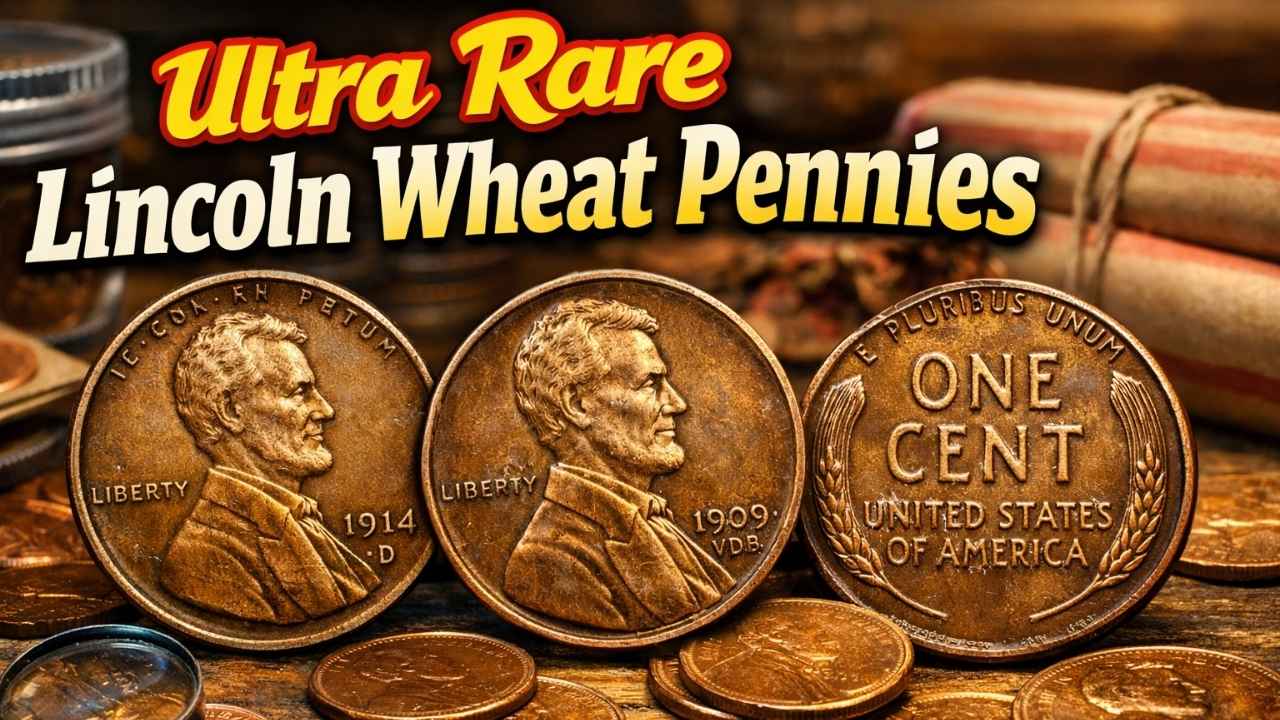
Ultra Rare Lincoln Wheat Pennies: For most people, a penny is the smallest and least important coin in their pocket. It gets tossed into jars, left in car cup holders, or ignored at the bottom of a wallet. But among collectors, certain Lincoln Wheat pennies are anything but ordinary. Some of these small copper coins have sold for thousands, even tens of thousands of dollars, simply because of rare mint errors or unusual varieties.
The Lincoln Wheat cent series, minted from 1909 to 1958, is one of the most collected coin series in United States history. Because so many were produced and circulated widely, they are still found in old collections, estate boxes, and occasionally in circulation. What makes the hunt exciting is that a tiny detail such as a doubled letter, an off center strike, or a wrong metal composition can transform a one cent coin into a five figure collectible.
In this detailed guide, you will learn about the most valuable error types in Lincoln Wheat pennies, how to identify them, and what makes them worth big money.
A Brief History of the Lincoln Wheat Penny
The Lincoln cent was introduced in 1909 to honor the 100th anniversary of the birth of Abraham Lincoln. It was the first regular issue United States coin to feature a real historical person rather than an allegorical figure.

The original design, created by Victor David Brenner, featured Lincoln’s portrait on the obverse and two wheat stalks framing the words One Cent on the reverse. Because of this design, these coins are commonly known as Wheat pennies.
From 1909 to 1958, billions of Wheat cents were struck at mints in Philadelphia, Denver, and San Francisco. With such large production numbers, errors were inevitable. Some errors were minor. Others were dramatic and rare. It is these rare errors that collectors eagerly search for today.

Why Error Coins Are So Valuable
Mint errors occur during the coin production process. Coins are created by striking blank metal discs called planchets between engraved dies. When something goes wrong at any stage of this process, the result can be a unique and sometimes spectacular error.
Error coins are valuable because:
They are often rare
They are accidental and unrepeatable
They create visual uniqueness
Collectors enjoy owning something unusual
Unlike standard coins that can be found by the millions, certain error types may exist in very small numbers. Scarcity combined with strong collector demand drives up prices.

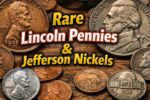
The Legendary 1943 Copper Lincoln Wheat Penny
One of the most famous and valuable error coins in American numismatics is the 1943 Copper Lincoln Wheat Penny.
In 1943, during World War II, copper was needed for military equipment. The United States Mint switched from bronze planchets to zinc coated steel for penny production. As a result, most 1943 pennies are silver colored steel cents.
However, a small number of leftover copper planchets from 1942 were accidentally used in 1943. These copper 1943 pennies are extremely rare.
Here is what makes them special:
They were struck in error
Only a few dozen are known
They look like normal copper pennies instead of steel
Authenticated examples have sold for over $100,000, and in some cases far more depending on condition. If you ever find a 1943 penny that sticks to a magnet, it is steel. If it does not stick and appears copper, it must be examined immediately by experts.
The 1955 Doubled Die Obverse
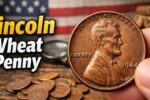
Another highly sought after error is the 1955 Doubled Die Obverse Lincoln Cent.
This coin features dramatic doubling on the obverse, especially visible in the date and the inscriptions In God We Trust and Liberty. The doubling occurred during the die creation process when the design was improperly aligned between hub impressions.
Unlike minor doubling that requires magnification, the 1955 doubled die is bold and obvious to the naked eye.
Collectors love this coin because:

The doubling is strong and dramatic
It is easy to identify
It is one of the most famous error coins ever produced
Even in circulated condition, these coins can sell for several thousand dollars. High grade examples regularly command five figure prices.
The 1922 No D Lincoln Wheat Penny
The 1922 No D Lincoln Wheat Penny is another fascinating variety.
In 1922, pennies were only struck at the Denver Mint. That means all 1922 pennies should have a D mint mark. However, due to die wear and polishing, some coins were struck with the D mint mark completely missing.
This resulted in the famous 1922 No D variety.
Key identification points:
No visible D mint mark
Strong reverse details
Weak obverse strike in some cases
High quality examples of the 1922 No D can sell for thousands, especially when authenticated and graded.
Off Center Strike Errors
Off center errors occur when the planchet is not properly aligned within the collar during striking. The result is a coin with part of the design missing and blank metal showing on one side.
The value of an off center Lincoln Wheat penny depends on:
Percentage off center
Visibility of the date
Overall condition
Coins that are 40 to 60 percent off center with a visible date are particularly desirable. Depending on how dramatic the error is, these coins can sell from hundreds to several thousand dollars.
Double Die Reverse Errors
While the 1955 doubled die obverse is the most famous, other doubled die errors exist on the reverse of Lincoln Wheat pennies.
A doubled die reverse shows duplication in elements such as:
Wheat stalk lines
Lettering in One Cent
Lettering in United States of America
These varieties are rarer and sometimes more subtle. However, rare examples in high grade can still command significant premiums.
The 1944 Steel Lincoln Wheat Penny
Just as copper pennies were mistakenly struck in 1943, the opposite error occurred in 1944.
In 1944, the Mint returned to copper planchets. However, a few leftover steel planchets from 1943 were accidentally used, creating the 1944 Steel Lincoln Wheat Penny.
These coins:
Appear silver colored
Stick to a magnet
Should not exist in steel for that year
Because of their extreme rarity, genuine 1944 steel cents have sold for tens of thousands of dollars at auction.
Clipped Planchet Errors
A clipped planchet occurs when the blank metal disc is improperly cut from the metal sheet, leaving a curved missing section on the finished coin.
On Lincoln Wheat pennies, clipped planchets are fairly popular among collectors. The value depends on:
Size of the clip
Visibility of date
Condition
While small clips may sell for modest premiums, large and dramatic clips can be worth hundreds or more.
Broadstrike Errors
A broadstrike error happens when a coin is struck without the restraining collar that normally shapes its edge. The coin spreads outward, appearing wider and thinner than normal.
Broadstrike Lincoln Wheat pennies can be visually impressive. Their value depends on how dramatic the expansion is and whether other errors accompany it.
Key Error Types and Potential Values
Below is a simplified reference table of some major Lincoln Wheat penny error types and their potential values.
| Error Type | Year Example | Key Feature | Potential Value Range |
|---|---|---|---|
| Copper on Steel Year | 1943 Copper | Copper instead of steel | $100,000 and up |
| Steel on Copper Year | 1944 Steel | Steel instead of copper | $50,000 and up |
| Doubled Die Obverse | 1955 | Strong date doubling | $1,500 to $20,000+ |
| Missing Mint Mark | 1922 No D | No D on Denver issue | $500 to $15,000+ |
| Off Center Strike | Various | Design shifted | $200 to $5,000+ |
| Clipped Planchet | Various | Curved missing section | $50 to $1,000+ |
Values vary significantly depending on grade and authentication.
How to Identify a Genuine Error
Because rare pennies can be worth so much, counterfeits and altered coins exist. It is important to verify authenticity carefully.
Here are steps you can take:
Use a magnet to test 1943 and 1944 cents
Examine doubling carefully for true separation, not machine doubling
Weigh the coin with a precise scale
Check mint marks for signs of tampering
Compare with verified examples
If you believe you have a valuable error, professional grading is strongly recommended.
The Importance of Condition
Condition plays a major role in value. A heavily worn 1955 doubled die will still be valuable, but a bright red uncirculated example could sell for many times more.
Collectors use grading terms such as:
Good
Fine
Extremely Fine
Mint State
Original color is especially important for copper coins. Red uncirculated examples command the highest premiums.
Never clean a Lincoln Wheat penny. Cleaning removes original surface metal and can significantly reduce its value.
Where People Find Valuable Wheat Pennies
Rare Lincoln Wheat pennies have been discovered in:
Old coin jars
Inherited collections
Estate sales
Bank wrapped rolls
Antique shops
Because billions were produced, many still exist in forgotten collections. The thrill of searching through rolls of pennies continues to attract collectors today.
Why Lincoln Wheat Pennies Remain So Popular
Part of the appeal comes from history. These coins circulated during major events including two World Wars, the Great Depression, and the early Cold War era.
Another reason is accessibility. Unlike rare gold coins, Wheat pennies are affordable to collect in basic form. This creates a large community of collectors, increasing demand for rare varieties and errors.
The combination of nostalgia, affordability, and the possibility of discovering a valuable error keeps interest strong decade after decade.
Tips for Searching Your Own Collection
If you want to search for valuable Wheat penny errors, follow these tips:
Sort coins by date
Separate 1943 and 1944 cents immediately
Inspect 1955 cents closely
Look for unusual coloration
Check for missing mint marks
Use magnification and good lighting
Patience is key. Most pennies will be common, but one rare discovery can make the entire search worthwhile.
Final Thoughts
Lincoln Wheat pennies may be small, but their potential value can be enormous. Error types such as the 1943 copper cent, the 1944 steel cent, the 1955 doubled die obverse, and the 1922 No D variety have proven that even a one cent coin can be worth thousands or more.
The next time you see an old Wheat penny, do not dismiss it as spare change. Take a closer look. Examine the date, the mint mark, the metal color, and the lettering. That tiny copper coin could be hiding a remarkable story and a surprisingly large payday.
Sometimes, the greatest treasures are not buried deep underground. They are hiding in plain sight, waiting in a jar of forgotten change.