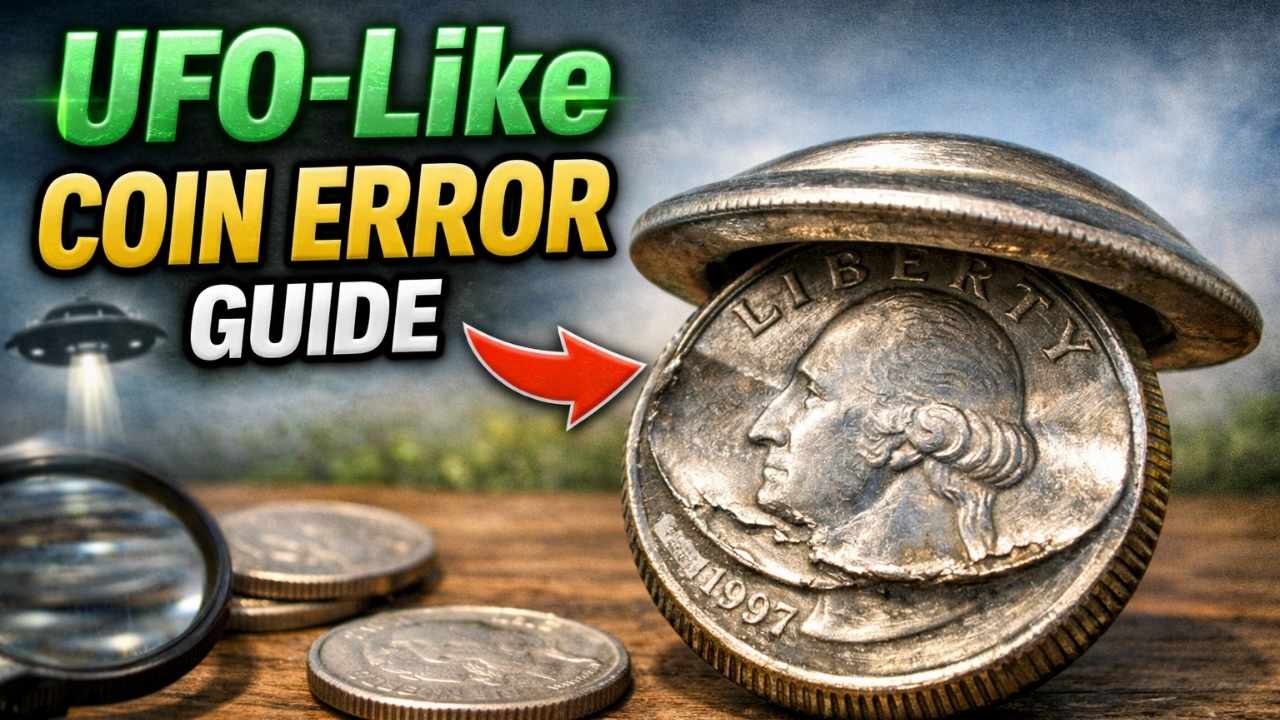
UFO-Like Coin Error Guide: Coin collecting has always been a fascinating hobby, but what truly excites collectors are the rare minting mistakes that slip past quality control. These errors transform ordinary coins into extraordinary treasures. Among them, some errors appear so unusual that collectors describe them as “UFO-like,” because of their strange shapes, off-center strikes, or mysterious patterns. Understanding these mistakes is the key to spotting hidden value in your pocket change.
Why Minting Errors Happen
Minting errors occur during the production process at the mint. Coins are struck by dies under immense pressure, and any misalignment, mechanical failure, or contamination can lead to anomalies. While most errors are caught and destroyed, a few escape into circulation. These survivors become prized collectibles, often worth far more than their face value.
Types of UFO-Like Coin Errors
Collectors categorize coin errors into several types. Some are subtle, while others are dramatic and instantly recognizable. Below is a table summarizing the most common UFO-like errors:
| Error Type | Description | Example of Value Added |
|---|---|---|
| Off-Center Strike | Coin design is shifted away from center | A quarter struck 50% off-center can fetch $100+ |
| Double Strike | Coin struck twice, creating overlapping images | A dime with clear double strike may reach $200 |
| Clipped Planchet | A portion of the coin is missing, resembling a bite mark | A clipped penny can sell for $50–$150 |
| Broadstrike | Coin struck without a collar, expanding its shape | A broadstruck nickel may be worth $75 |
| Die Cap Error | Coin sticks to die and forms a “cap” shape | Rare die caps can exceed $500 |
| Wrong Planchet | Coin struck on metal intended for another denomination | A nickel struck on a dime planchet can reach $1,000+ |
Off-Center Strikes
One of the most visually striking errors is the off-center strike. These coins look warped, with part of the design missing. The more dramatic the off-center, the higher the value. Collectors especially prize coins where the date remains visible, as it confirms authenticity.

Double Strikes
Double strikes occur when a coin is struck twice by the die. The result is a ghostly overlapping image that looks almost alien. These coins are rare and command strong premiums, especially if both strikes are clear and distinct.
Clipped Planchets
A clipped planchet error happens when the blank metal disc is improperly cut before striking. The coin appears to have a crescent-shaped bite taken out of it. These errors are easy to spot and highly collectible.
Broadstrikes
Broadstrikes occur when the collar that holds the coin in place during striking fails. The coin spreads outward, creating a wider, flatter appearance. These coins often look like they have melted edges, giving them a UFO-like aura.
Die Cap Errors
Die cap errors are among the most dramatic. When a coin sticks to the die, subsequent strikes cause it to bend upward, forming a cap-like shape. These coins are extremely rare and often sell for hundreds of dollars.

Wrong Planchet Errors
Perhaps the most valuable error type is the wrong planchet strike. This happens when a coin is struck on a blank meant for another denomination. For example, a penny struck on a dime planchet is smaller and silver-colored. Such mistakes are highly prized and can fetch thousands.
How to Spot UFO-Like Errors
Collectors should carefully examine coins for anomalies. Look for:
- Off-center designs
- Missing portions
- Overlapping images
- Odd shapes or expanded edges
- Unusual metal color or weight
A magnifying glass and good lighting are essential tools for spotting these details.
Value Factors
The value of an error coin depends on:

- Rarity of the error type
- Visibility of the mistake
- Condition of the coin
- Demand among collectors
A minor off-center strike may only add a few dollars, while a dramatic wrong planchet error can be worth thousands.
Famous UFO-Like Coin Errors
Some legendary examples include:
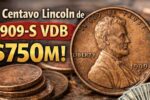
- 1955 Double Die Lincoln Cent, famous for its doubled lettering
- 2000 Sacagawea Dollar struck on a quarter planchet
- Dramatic die cap nickels that resemble tiny UFOs
These coins have become icons in the numismatic world.
Collecting and Preserving Error Coins
Collectors should store error coins in protective holders to prevent damage. Avoid cleaning them, as this reduces value. Documentation and grading by professional services can further enhance their worth.
Conclusion
UFO-like coin errors are more than curiosities—they are treasures born from mistakes. Each error tells a story of the minting process and offers collectors a chance to own something truly unique. Whether it’s an off-center strike or a dramatic die cap, these coins prove that imperfection can be priceless.