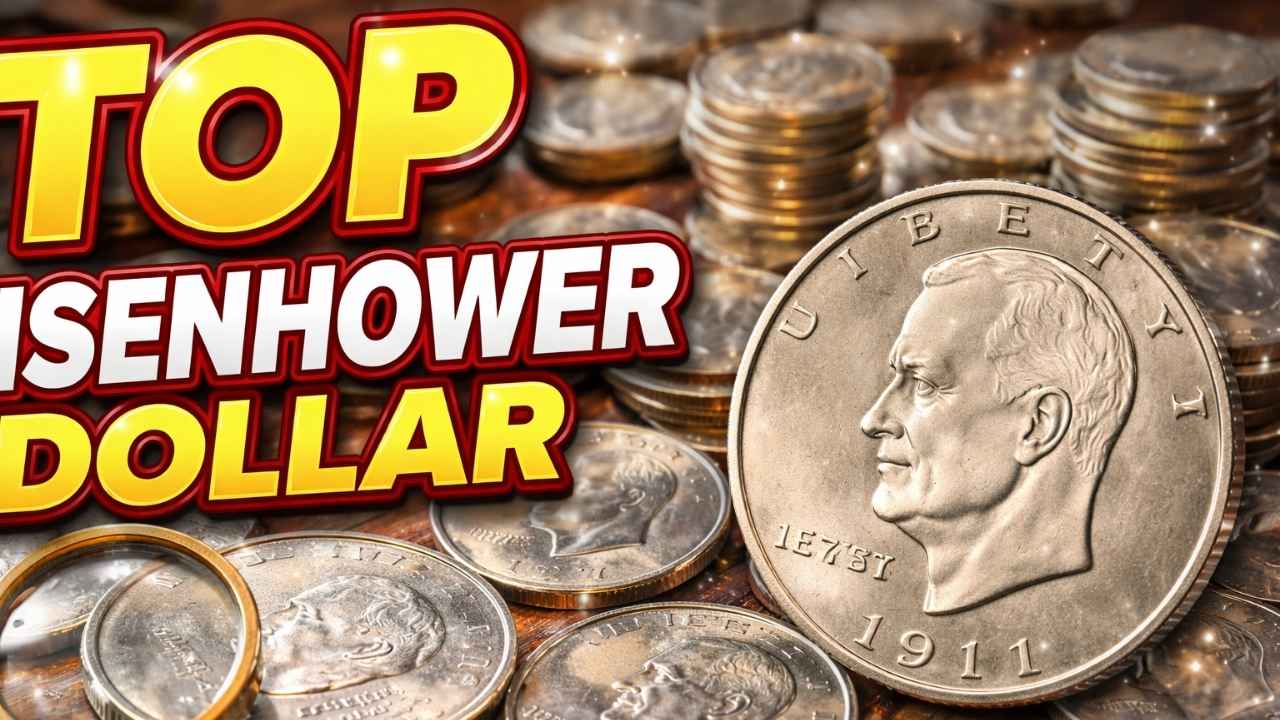
Top Eisenhower Dollar: The Eisenhower Dollar holds a special place in modern American coinage. Struck from 1971 through 1978, it was the last large size dollar coin issued for general circulation in the United States. Though often overlooked for decades, collector interest has grown steadily, and in 2026 several key varieties are commanding serious money.
Featuring President Dwight D. Eisenhower on the obverse and an eagle landing on the moon on the reverse, the coin also honors the Apollo 11 mission. The design was created by Chief Engraver Frank Gasparro, making it historically significant for both political and space exploration themes.
This complete collector’s guide explores the top Eisenhower Dollar varieties worth big money in 2026, including rare mint marks, key dates, major errors, and condition rarities. Whether you are new to collecting or already building a high grade set, this article will help you identify coins that deserve closer inspection.
History of the Eisenhower Dollar
After the death of Dwight D. Eisenhower in 1969, Congress authorized a new dollar coin to honor him. Production began in 1971 at the United States Mint.
The coins were struck at three facilities:
Philadelphia
Denver
San Francisco
Philadelphia coins initially carried no mint mark until 1979, so Eisenhower Dollars from 1971 to 1978 without a mint mark were produced there.
San Francisco struck both clad and 40 percent silver versions for collectors. This dual composition makes the series more complex and exciting.
Though the coin never gained wide circulation popularity due to its large size and weight, collectors today appreciate the series for its short run, bold design, and numerous varieties.
Eisenhower Dollar Value Chart 2026
Below is a general value chart reflecting approximate retail values in 2026. Prices vary depending on grade, certification, eye appeal, and market demand.
| Date and Mint | Circulated | MS63 | MS65 | MS67 | Proof PR69 | Silver MS65 |
|---|---|---|---|---|---|---|
| 1971 P | $1 to $2 | $10 | $30 | $2,000 and up | N/A | N/A |
| 1971 D | $1 to $2 | $8 | $25 | $1,500 and up | N/A | N/A |
| 1971 S Silver | N/A | N/A | N/A | N/A | $40 to $80 | $100 to $300 |
| 1972 Type 2 P | $5 to $15 | $75 | $200 | $5,000 and up | N/A | N/A |
| 1973 P | $2 to $5 | $15 | $40 | $3,000 and up | N/A | N/A |
| 1976 Type 1 P | $1 to $3 | $12 | $35 | $1,000 and up | N/A | N/A |
| 1976 Type 2 P | $1 to $3 | $10 | $30 | $800 and up | N/A | N/A |
| 1977 D | $1 to $2 | $8 | $20 | $1,200 and up | N/A | N/A |
| 1978 P | $1 to $2 | $10 | $25 | $1,500 and up | N/A | N/A |
Coins graded MS67 or higher are often population rarities, which explains the dramatic jump in value at the highest levels.
1971 Eisenhower Dollar Varieties
The 1971 issue marked the first year of production. Collectors closely examine strike quality, especially on the Earth design on the reverse.
Philadelphia and Denver coins are common in lower mint state grades. However, fully struck examples with sharp details and minimal contact marks are scarce.
The 1971 S silver version is particularly popular. These coins contain 40 percent silver and were sold in special collector sets. High grade uncirculated silver examples and deep cameo proofs continue to rise in value in 2026.
1972 Type 1, Type 2, and Type 3 Varieties
The 1972 Philadelphia issue is famous for three reverse types. The difference appears in the depiction of the Earth on the reverse.
Type 1 shows a somewhat flattened Florida.
Type 2 displays a more detailed and rounded Earth, but it is the rarest variety.
Type 3 features a modified Earth with clearer outlines.
The 1972 Type 2 is the key circulation strike of the entire series. It had a limited die usage and is difficult to locate in high grade. Even circulated examples can bring notable premiums, while certified MS66 and MS67 coins sell for thousands in 2026.
Collectors building a complete Eisenhower Dollar variety set must secure all three types, but the Type 2 remains the true prize.
1973 Circulation Strike Scarcity
In 1973, Eisenhower Dollars were not released for general circulation. Instead, they were included only in mint sets.
This makes 1973 P and 1973 D coins more difficult to find in worn condition. Most surviving pieces remain in mint state, but high grade examples free of marks are surprisingly scarce.
The limited distribution increases collector demand, especially for top population coins graded MS67 or better.
1974 Silver and Clad Issues
The 1974 Eisenhower Dollars include both clad and 40 percent silver versions. While common in lower grades, superb gem examples are rare.
Collectors in 2026 are particularly interested in coins with strong luster and clean fields. Silver issues continue to benefit from both numismatic and bullion interest, although their true premium lies in condition rather than metal content.
Proof silver coins with deep cameo contrast remain strong performers in the market.
1976 Bicentennial Type 1 and Type 2
The Bicentennial Eisenhower Dollar features a special reverse design created for the 200th anniversary of American independence. The obverse retains Eisenhower’s portrait, while the reverse displays the Liberty Bell superimposed over the moon.
The dual date 1776 to 1976 appears on all Bicentennial issues.
There are two main types:
Type 1 features bold, thick lettering.
Type 2 displays thinner, more refined lettering.
Both types were produced at Philadelphia and Denver. High grade Type 1 coins are particularly scarce in MS67 and above. Silver versions were also struck at San Francisco and are popular among collectors.
The Bicentennial design adds historical appeal, contributing to strong demand in 2026.
1977 and 1978 Final Years
The final two years of the series, 1977 and 1978, are often overlooked. While common in lower grades, superb gems are difficult to locate.
Many coins from these years suffer from weak strikes or heavy bag marks. As a result, population reports show very limited numbers in MS67 or higher.
The 1978 P issue has gained attention recently due to its scarcity in top condition. Collectors seeking registry set upgrades are pushing prices upward for premium examples.
Major Eisenhower Dollar Errors Worth Big Money
Error coins add another layer of excitement to the series. Some of the most valuable Eisenhower Dollar errors include:
Double die obverse
Off center strikes
Wrong planchet strikes
Clipped planchets
Broadstrikes
Double die examples may show noticeable doubling in the lettering or date. Strong examples can bring hundreds or even thousands of dollars depending on grade.
Wrong planchet errors are especially dramatic. For example, an Eisenhower Dollar struck on a quarter or half dollar planchet will appear undersized. Such pieces are rare and highly sought after.
Authentication by a reputable grading service is essential for high value errors.
Silver vs Clad Eisenhower Dollars
Understanding composition is crucial when evaluating value.
Clad coins contain a copper core with outer layers of copper nickel.
Silver coins from San Francisco contain 40 percent silver.
Silver issues were never intended for circulation. They were sold directly to collectors in special packaging.
While silver content adds intrinsic value, the largest premiums in 2026 come from condition rarity and variety status rather than melt value alone.
Factors Driving High Values in 2026
Several factors are pushing certain Eisenhower Dollar varieties to record levels in 2026.
Low survival rates in high grade
Registry set competition
Increased interest in modern coinage
Silver market strength
Growing appreciation for short series sets
Because the series ran for only eight years, it is achievable for collectors to complete. This manageable length increases demand for key varieties and top population coins.
As more collectors compete for the finest known examples, prices continue to rise.
How to Identify Valuable Eisenhower Dollar Varieties
Start by examining the date and mint mark. Use magnification to inspect the reverse Earth design for 1972 varieties.
Check strike quality on the moon and Liberty Bell for Bicentennial issues. Look for doubling in the lettering and unusual features that may indicate errors.
Weigh the coin to confirm whether it is clad or silver. Silver coins weigh slightly more than clad examples.
Condition assessment is critical. Focus on luster, contact marks, and overall eye appeal. Coins with clean surfaces and sharp details command the highest premiums.
Professional grading can significantly enhance marketability and value.
Investment Potential and Long Term Outlook
The Eisenhower Dollar series combines historical significance, short production span, and multiple collectible varieties. These qualities make it attractive to both casual hobbyists and serious investors.
While common circulated coins remain affordable, condition rarities and key varieties have shown impressive growth. The 1972 Type 2, high grade Bicentennial issues, and select silver proofs are among the strongest performers.
As the generation that remembers using these coins grows more nostalgic, demand may continue to expand. Modern collectors increasingly appreciate large format coins with bold designs.
Final Thoughts on Top Eisenhower Dollar Varieties Worth Big Money in 2026
The Eisenhower Dollar is no longer just a bulky relic of the 1970s. In 2026, it stands as a dynamic and rewarding series filled with hidden gems.
From the rare 1972 Type 2 reverse to high grade Bicentennial varieties and dramatic mint errors, certain coins are worth far more than their one dollar face value.
Careful study, attention to detail, and patience are key. With the right knowledge, collectors can uncover Eisenhower Dollar varieties that truly bring big money in today’s market.