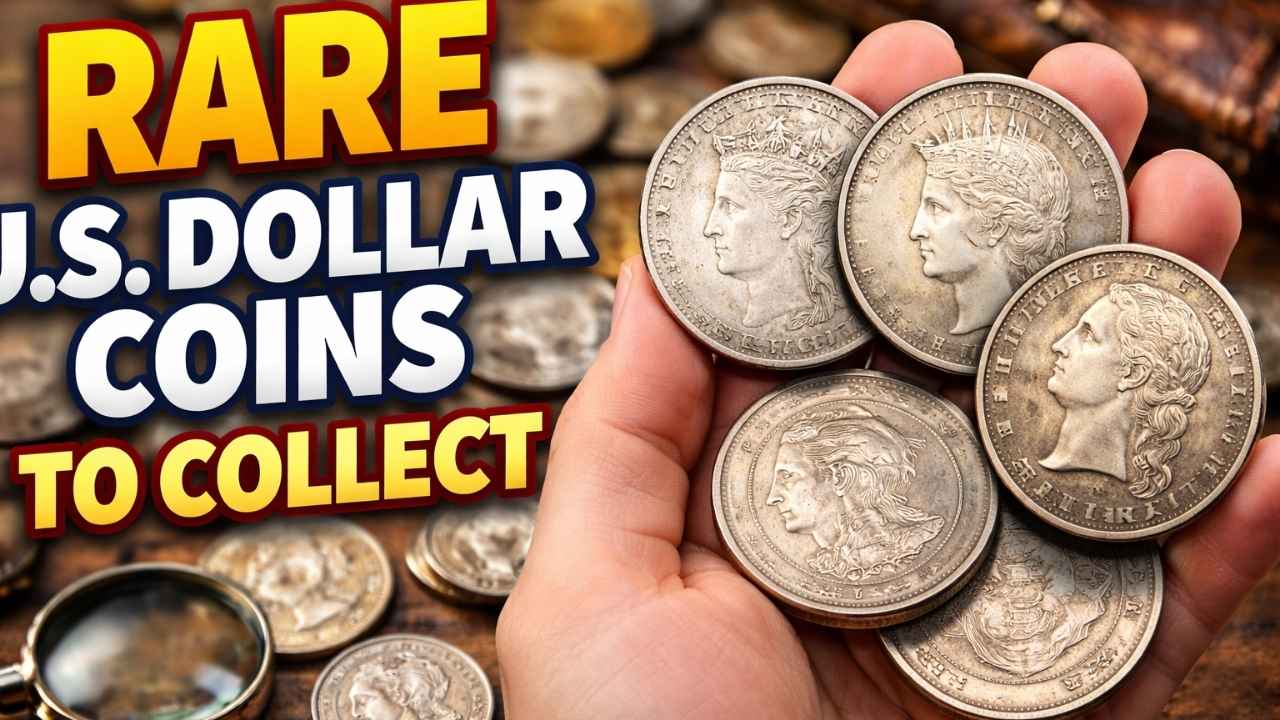
Rare U.S. Dollar Coins to Collect: For decades, dollar coins in the United States have struggled to gain everyday popularity. Many people prefer paper bills, leaving millions of dollar coins sitting in storage or tucked away in drawers. Yet among these overlooked coins are a few surprising treasures. Certain Susan B. Anthony and Sacagawea dollar coins have become highly collectible, with some rare varieties worth hundreds or even thousands of dollars.
Collectors are especially drawn to these coins because of their historical significance and unique minting variations. Understanding which dates and errors to look for can turn an ordinary coin into a valuable find.
The Story Behind the Susan B. Anthony Dollar
The Susan B. Anthony dollar was introduced in 1979. It marked the first time a real woman appeared on a circulating United States coin. The coin honors women’s rights activist Susan B. Anthony, a key figure in the fight for women’s suffrage.
The design features Anthony’s portrait on the front and an eagle landing on the moon on the reverse, inspired by the Apollo 11 mission insignia. Despite its historical importance, the coin was not widely accepted by the public. Many people found it too similar in size and color to the quarter, which caused confusion in everyday transactions.
Production stopped in 1981 due to low demand, though a final batch was minted in 1999 to meet temporary circulation needs. While most Susan B. Anthony dollars are worth only face value, certain varieties are highly sought after.
Valuable Susan B. Anthony Dollar Varieties
One of the most famous and valuable versions is the 1979 P Wide Rim variety. Also known as the Near Date variety, this coin features the date positioned closer to the rim than usual. The difference is subtle but noticeable once you know what to look for.

Because the Wide Rim variety was produced in smaller numbers, it commands higher prices in the collector market. In uncirculated condition, it can be worth several hundred dollars.
Another key date is the 1981 Susan B. Anthony dollar. Although minted in Philadelphia, Denver, and San Francisco, most 1981 coins were not released widely into circulation. Instead, they were sold in mint sets. High grade examples, especially those with strong details and original luster, can bring significant premiums.
Proof coins from San Francisco, particularly those with a Type 2 clear S mint mark, are also popular. The sharper mint mark makes them distinct from the more common Type 1 variety.
The Introduction of the Sacagawea Dollar
After the Susan B. Anthony dollar struggled in circulation, the United States introduced a new design in 2000. The Sacagawea dollar featured a golden color and a smoother edge, making it easier to distinguish from other coins.

The obverse showcases Sacagawea carrying her infant son, Jean Baptiste. Sacagawea was the Shoshone woman who assisted the Lewis and Clark expedition as an interpreter and guide. The reverse initially displayed a soaring eagle, symbolizing peace and freedom.
The golden appearance of the coin comes from a manganese brass alloy, not actual gold. Although the design was visually appealing, the coin still faced challenges in everyday use. However, collectors quickly discovered several rare varieties that increased its appeal.

2000 P Cheerios Dollar
One of the most famous Sacagawea dollar varieties is the 2000 P Cheerios dollar. In early 2000, a limited number of Sacagawea dollars were included in Cheerios cereal boxes as part of a promotional campaign. These special coins featured enhanced tail feather details on the eagle reverse.
At first, many people did not realize there was a difference. Years later, collectors identified the enhanced feather design as a unique die variety. Authentic Cheerios dollars are now highly valuable, especially in top condition. Some have sold for thousands of dollars at auction.
Because of their value, authentication is important. The feather details must match the known enhanced pattern to qualify as a genuine Cheerios variety.
2000 P Wounded Eagle Error
Another intriguing Sacagawea dollar error is the 2000 P Wounded Eagle. This variety shows a die gouge that appears like a spear or line piercing the eagle on the reverse. The dramatic appearance of the mark gives the coin its nickname.
The error was caused by damage to the die during production. Coins struck from that damaged die display the same distinctive line. Depending on condition, these coins can sell for several hundred dollars or more.
Collectors value this coin not only for its rarity but also for its eye catching and unusual look.
Proof and Burnished Issues
Both Susan B. Anthony and Sacagawea dollars were produced in proof versions specifically for collectors. Proof coins are struck using specially polished dies and planchets, resulting in mirror like surfaces and sharp details.
Proof coins from San Francisco often carry an S mint mark. Certain low mintage years and high grade certified examples can bring strong premiums in the market.
In later years, special burnished versions were also released as part of collector sets. These coins have a satin like finish and are generally produced in lower quantities than regular circulation strikes.
Condition plays a major role in determining value. Coins graded at the highest levels, such as MS69 or MS70, are far rarer than average uncirculated pieces.
What Makes a Dollar Coin Valuable
Several factors determine whether a Susan B. Anthony or Sacagawea dollar is worth more than face value. Low mintage numbers, minting errors, special varieties, and high grade preservation all contribute to value.
Demand among collectors also matters. A coin with an interesting story or visually striking error often attracts more attention. Historical significance can further boost long term interest.
It is also important to store coins properly. Exposure to moisture, air, and handling can reduce condition and lower value. Using protective holders and minimizing direct contact helps preserve original surfaces.
Are These Coins Still in Circulation
Although dollar coins are not commonly used in daily transactions, they are still legal tender and occasionally appear in circulation. Some banks may have rolls available upon request.
It is possible to find collectible varieties in circulation, though the chances are slim. Estate collections, coin rolls, and old mint sets remain more reliable sources.
Searching through coins can be both educational and rewarding. Even if you do not find a rare variety, learning to identify different mint marks and finishes builds valuable collecting skills.
A Modern Treasure Hunt
Susan B. Anthony and Sacagawea dollar coins may not have replaced the dollar bill, but they have carved out an important place in American numismatic history. They represent milestones in design, diversity, and minting technology.
For collectors, these coins offer an exciting blend of history and opportunity. A simple difference in rim spacing or feather detail can transform an ordinary dollar into a sought after collectible.