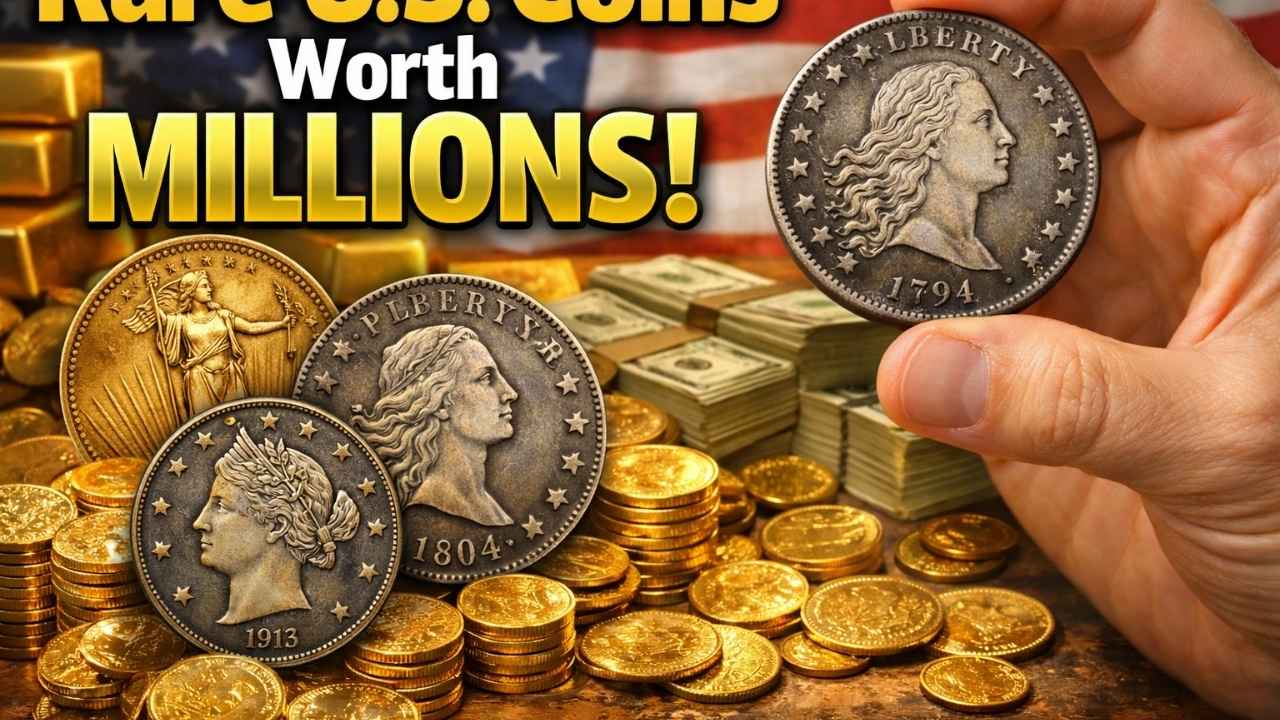
3 Rare U.S. Coins Worth Millions: Imagine reaching into your pocket for spare change and pulling out a coin worth more than your house. It sounds like a dream, but for a few lucky collectors, that dream has become reality. Rare coins have fascinated Americans for generations. Some were minted in tiny numbers. Others were struck by mistake. A few were never meant to leave government vaults at all.
Yet, despite their incredible value, some of these coins have circulated quietly among everyday people. Many collectors believe that rare treasures are still hiding in jars, drawers, or forgotten piggy banks across the country.

In this article, we will explore three of the rarest and most valuable U.S. coins ever discovered. We will look at their history, what makes them valuable, how to identify them, and whether you might unknowingly own one.
Why Some Coins Become Worth Millions
Before diving into specific coins, it helps to understand why certain pieces of metal can command such staggering prices.

Several key factors determine a coin’s value:
Scarcity
Coins minted in extremely small quantities are naturally rare. When only a handful exist, collectors compete fiercely.
Historical significance
Coins tied to major historical events often become more desirable.
Minting errors
Mistakes during production sometimes create unique variations that collectors treasure.

Condition
A coin in pristine condition is worth far more than one that is worn or damaged.
Collector demand
Even a rare coin needs strong demand to reach record prices.

When all these factors combine, prices can skyrocket into the millions.
Now let us explore three legendary coins that have reached that level.

The 1933 Double Eagle
Few coins carry as much mystery and drama as the 1933 Double Eagle. Officially, this was a twenty dollar gold coin produced by the United States Mint in 1933. However, almost none were ever legally released to the public.
The story begins during the Great Depression. In 1933, President Franklin D. Roosevelt took the United States off the gold standard. Citizens were required to return most gold coins to the government. As a result, the 1933 Double Eagles were never circulated. Nearly all were melted down.

But a few escaped.
Over the decades, several specimens surfaced in private collections. Legal battles followed, and ownership of these coins became a high profile issue between collectors and the government.

In 2002, one authenticated example was sold at auction for more than 7 million dollars. In 2021, another specimen shattered records when it sold for over 18 million dollars, making it the most expensive coin ever sold.
How to Identify It
The 1933 Double Eagle features Lady Liberty holding a torch and olive branch on the front. The back shows a soaring eagle. It carries a face value of twenty dollars and the date 1933.

However, here is the reality. If you somehow found one, the legal situation could be complicated. Most examples are considered government property. Still, the coin remains one of the most famous treasures in American numismatic history.
The 1913 Liberty Head Nickel
The 1913 Liberty Head Nickel is one of the most intriguing coins ever produced by the United States Mint. Official records indicate that Liberty Head nickels were last minted in 1912. Yet somehow, five coins dated 1913 exist.
These coins were never officially authorized. Many experts believe they were struck secretly by a Mint employee.
Only five specimens are known to exist today. Each has a name and a well documented ownership history. They have appeared in museums, major collections, and even television shows.
One example sold for more than 3 million dollars at auction. Another specimen has changed hands privately for even higher amounts.
Key Details at a Glance
| Feature | Description |
|---|---|
| Coin Name | 1913 Liberty Head Nickel |
| Face Value | 5 cents |
| Known Examples | 5 |
| Metal | Copper nickel |
| Record Sale | Over 3 million dollars |
How to Spot One
The front shows Lady Liberty in profile. The reverse displays a large Roman numeral V for five cents. The date 1913 appears below Liberty’s portrait.
Because only five are known, the odds of finding one in circulation are extremely small. Still, the existence of unauthorized mint strikes fuels the imagination of collectors everywhere.
The 1943 Copper Penny
During World War II, copper was needed for wartime production. In 1943, the U.S. Mint switched from copper pennies to steel coated with zinc. These steel cents appear silver in color.
However, a few copper planchets from 1942 were accidentally left in the presses. As a result, a small number of 1943 pennies were struck in copper instead of steel.
These rare error coins are among the most valuable Lincoln cents ever discovered.
One 1943 copper penny sold for more than 1 million dollars. Even examples in lower grades can fetch hundreds of thousands.
Identification Checklist
If you think you have a 1943 copper penny, check the following:
- The date must read 1943.
- The coin should not stick to a magnet. Steel cents are magnetic. Copper ones are not.
- The color should be brown or reddish, not silver.
- Have it authenticated by a professional grading service.
Be cautious. Many fakes exist. Some people alter 1948 pennies to look like 1943. Others copper plate steel cents. Professional evaluation is essential.
Quick Comparison Table
Below is a simple comparison of the three coins discussed.
| Coin | Year | Estimated Value | Why It Is Rare |
|---|---|---|---|
| 1933 Double Eagle | 1933 | Up to 18 million dollars | Most were melted after gold recall |
| 1913 Liberty Head Nickel | 1913 | Over 3 million dollars | Only five secretly made |
| 1943 Copper Penny | 1943 | Up to 1 million dollars | Minting error during wartime |
Could One Really Be in Your Pocket?
Realistically, the chances are extremely slim. Most high value coins are already documented and tracked by collectors and institutions.
However, valuable coins are discovered every year. Sometimes they are found in inherited collections. Other times they appear in estate sales, old safes, or coin jars that have not been touched for decades.
The 1943 copper penny is the most plausible candidate to still be discovered in everyday circulation. Because pennies are so common and often overlooked, rare examples can slip through unnoticed.
The key is awareness. Many people handle coins daily without examining them closely. A simple habit of checking dates and mint marks could reveal something extraordinary.
What To Do If You Think You Found a Rare Coin
If you suspect you have a valuable coin:
Do not clean it
Cleaning can reduce value dramatically.
Handle it carefully
Hold coins by the edges to avoid fingerprints.
Store it safely
Use a soft holder or protective case.
Seek professional authentication
Contact a reputable coin grading service or experienced numismatist.
Avoid rushing into a sale
If genuine, multiple auction houses may compete to represent it.
Patience and proper verification can mean the difference between a few dollars and a life changing payout.
Why Coin Collecting Remains So Popular
Coin collecting combines history, art, economics, and treasure hunting into one hobby. Every coin tells a story. From economic crises to wartime shortages, coins reflect the moments in which they were created.
For some, collecting is about profit. For others, it is about preserving history. The idea that a small object could carry such immense value adds excitement to every transaction involving spare change.
Even if you never find a million dollar rarity, the search itself can be rewarding.
Final Thoughts
The 1933 Double Eagle, the 1913 Liberty Head Nickel, and the 1943 Copper Penny are more than just coins. They are symbols of rarity, mystery, and opportunity.
While the odds of discovering one are incredibly low, history proves that extraordinary finds do happen. Valuable coins have surfaced in unexpected places before, and they will likely continue to do so.
So the next time you receive change at a store or empty your coin jar, take a closer look. That ordinary piece of metal might just hold an extraordinary secret.