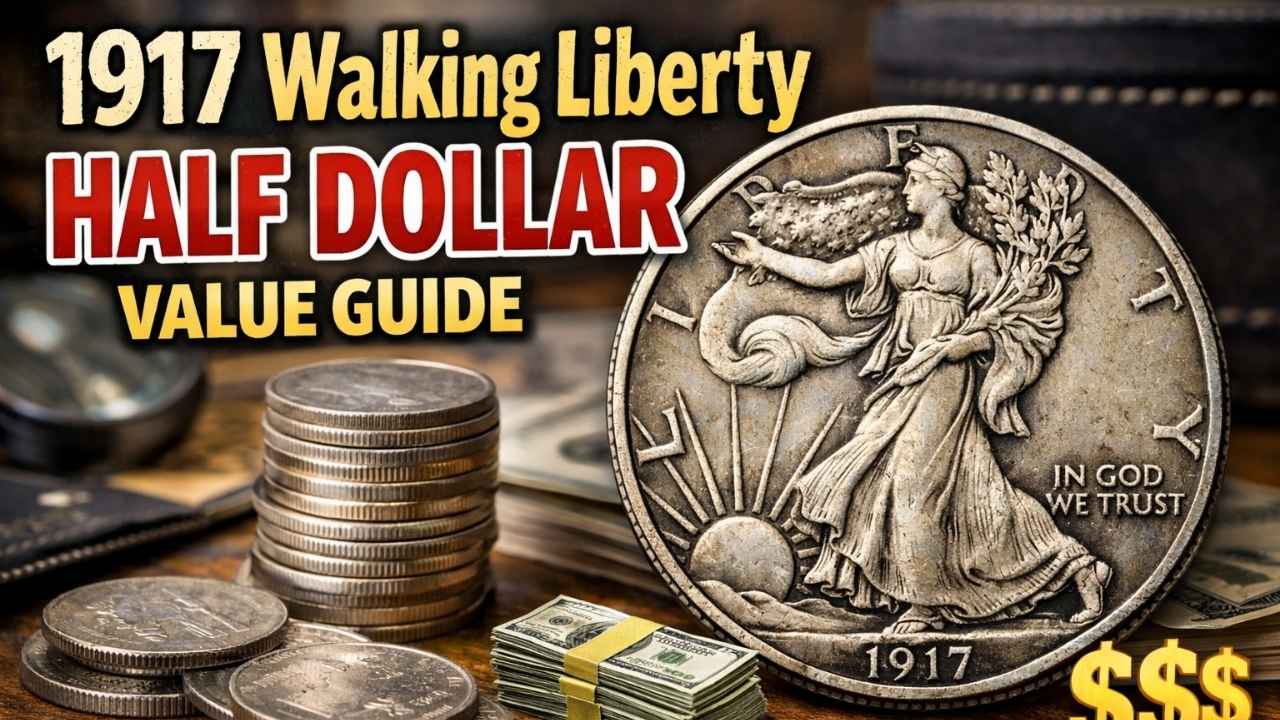
1917 Walking Liberty Half Dollar Value Guide: The Walking Liberty Half Dollar, first minted in 1916, is celebrated as one of the most beautiful coins in American history. Designed by Adolph A. Weinman, it features Lady Liberty striding toward the dawn of a new day, draped in the American flag, carrying branches of laurel and oak. The reverse depicts a powerful eagle perched on a rocky crag. This coin was produced until 1947, and its artistry later inspired the design of the modern American Silver Eagle bullion coin.
Among the many issues in the series, the 1917 Walking Liberty Half Dollar stands out as a rare and valuable piece. Though most examples have long since disappeared from circulation, occasional discoveries still occur, making this coin a thrilling find for collectors and treasure hunters.
Historical Context of the 1917 Issue
The year 1917 was marked by America’s entry into World War I. Coinage from this period reflects both the artistry of the era and the economic challenges of wartime production. The 1917 Walking Liberty Half Dollar was struck at three different mints: Philadelphia, Denver, and San Francisco. Each mint produced coins with subtle variations, and certain issues are rarer than others.
Key Varieties of the 1917 Walking Liberty Half Dollar
Collectors recognize several important varieties of the 1917 issue:

- 1917 Philadelphia (No Mint Mark)
- 1917-D Obverse Mint Mark
- 1917-D Reverse Mint Mark
- 1917-S Obverse Mint Mark
- 1917-S Reverse Mint Mark
The obverse mint mark varieties are scarcer and command higher premiums, while reverse mint mark issues are more common but still collectible.
Value of the 1917 Walking Liberty Half Dollar
The value of the 1917 Walking Liberty Half Dollar depends on condition, mint mark placement, and rarity. Circulated examples may sell for modest sums, but uncirculated specimens can command thousands of dollars. Coins with the obverse mint mark varieties are particularly valuable due to their scarcity.

Comparison Table of 1917 Walking Liberty Half Dollar Values
| Variety | Key Feature | Estimated Value (2026) | Collector Appeal |
|---|---|---|---|
| 1917 Philadelphia | No mint mark | $50–$500 | Entry level collectible |
| 1917-D Obverse | Mint mark on obverse | $1,000–$10,000+ | Scarce and highly prized |
| 1917-D Reverse | Mint mark on reverse | $200–$2,000 | Popular Denver issue |
| 1917-S Obverse | Mint mark on obverse | $2,000–$15,000+ | Rare San Francisco variety |
| 1917-S Reverse | Mint mark on reverse | $300–$3,000 | Desirable West Coast issue |
How to Identify Rare Varieties
Collectors should carefully examine the placement of the mint mark. On obverse mint mark varieties, the letter “D” or “S” appears on the front of the coin below “In God We Trust.” On reverse mint mark varieties, the letter appears near the eagle on the back. Magnification tools can help confirm mint mark placement and detect signs of wear or damage. Authenticity is crucial, as counterfeits exist for rare varieties.
The Role of Grading
Grading plays a crucial role in determining the value of the 1917 Walking Liberty Half Dollar. Coins are graded on a scale from Poor (P-1) to Mint State (MS-70). For rare varieties, even small differences in grade can mean thousands of dollars in value. Certification by services such as PCGS or NGC provides assurance of authenticity and quality. Eye appeal, luster, and strike quality also influence value.
Auction Records and Market Trends
Auction houses have seen remarkable prices for rare 1917 Walking Liberty Half Dollars in recent years. The 1917-S Obverse Mint Mark has sold for more than $15,000 in high grades. The 1917-D Obverse Mint Mark has crossed the $10,000 mark. These records reflect strong demand and limited supply. In 2026, the market remains robust, with collectors eager to acquire these rarities. As more people discover the appeal of Walking Liberty Half Dollars, prices are likely to continue rising.
Collecting Strategies in 2026
For collectors entering the Walking Liberty Half Dollar market in 2026, strategy is essential. Focus on coins with strong provenance, certified authenticity, and historical significance. Building a collection around key dates and mint mark varieties creates a compelling narrative and enhances investment potential. Even if multimillion dollar rarities are unattainable, collectors can pursue affordable examples of common issues to build a foundation.

Conclusion
The 1917 Walking Liberty Half Dollar is more than just a coin; it is a treasure that embodies history, artistry, and rarity. From obverse mint mark varieties to high grade specimens, these coins captivate collectors and investors alike. In 2026, the rare 1917 Walking Liberty Half Dollar continues to inspire fascination and admiration. It proves that even a coin once used in everyday commerce can hold stories worth thousands of dollars.