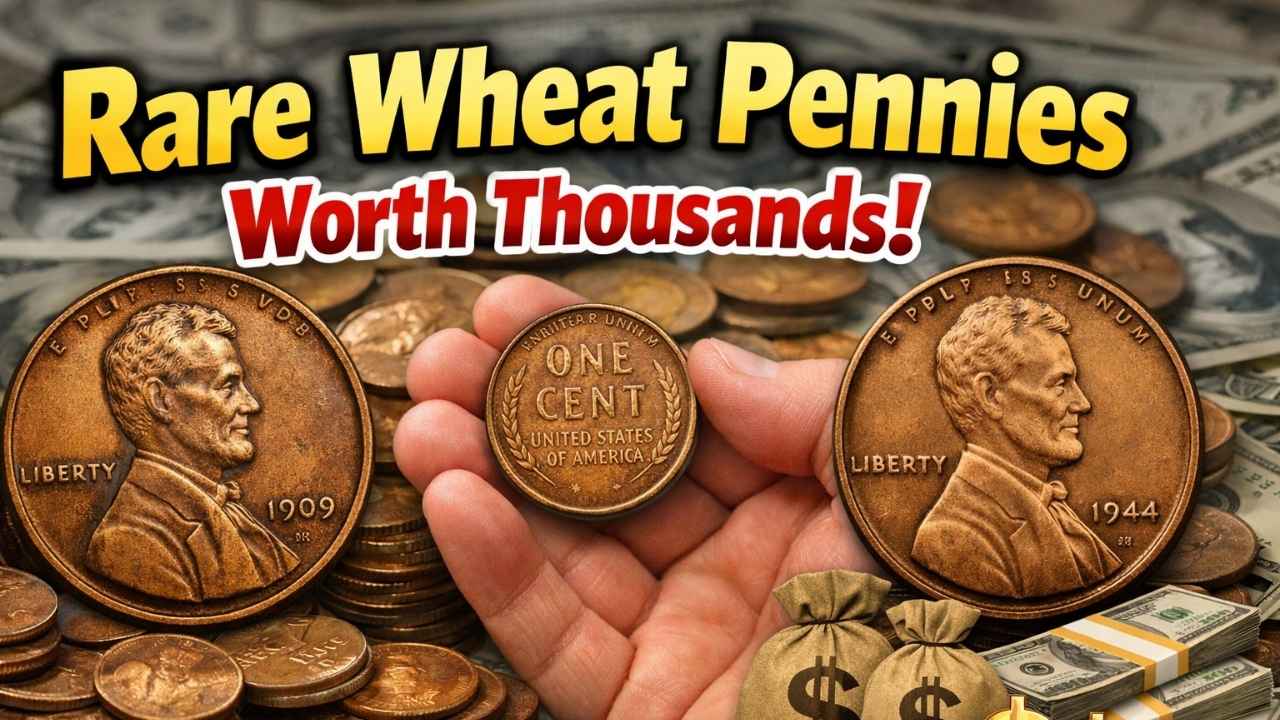
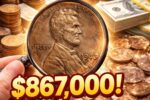
1909 S VDB Lincoln Penny: In 1909, the United States Mint introduced a coin that would forever change American numismatics. The Lincoln cent was the first regular-issue coin to feature the likeness of an actual historical figure rather than a symbolic representation of liberty. President Abraham Lincoln, revered for his leadership during the Civil War, was chosen to mark the centennial of his birth. The coin’s design was entrusted to Victor David Brenner, a Lithuanian-born engraver whose artistry captured Lincoln’s solemn dignity.
The penny was revolutionary not only in design but also in cultural significance. It represented a shift toward honoring real people who shaped the nation. Brenner’s initials, VDB, were placed prominently on the reverse of the coin, a decision that would spark controversy and ultimately create one of the rarest and most coveted coins in American history.
The Controversy of the VDB Initials
When the Lincoln cent debuted, collectors and the public quickly noticed the bold “VDB” initials at the bottom of the reverse side. Some critics argued that Brenner’s signature was too conspicuous, overshadowing the coin’s national symbolism. The backlash was swift, and the Mint decided to remove the initials entirely. This decision created a unique situation: only a limited number of coins struck at the San Francisco Mint in 1909 bore the “S VDB” mark.
The San Francisco Mint produced fewer than half a million of these coins before the initials were removed. That small mintage, combined with the historical significance of the design, transformed the 1909 S VDB penny into a numismatic legend. Collectors began to chase it with fervor, and its reputation as a “holy grail” of coin collecting was born.
Why the 1909 S VDB Penny Is So Rare
Rarity in coin collecting is often a product of limited production, historical context, and collector demand. The 1909 S VDB penny checks all three boxes. With only 484,000 minted, it was scarce from the start. Many of those coins entered circulation, suffering wear and tear that diminished their condition. Finding one in pristine, uncirculated state became nearly impossible.
The coin’s rarity is amplified by its symbolism. It represents the dawn of modern coinage in America, the controversy over artistic recognition, and the enduring legacy of Abraham Lincoln. Collectors view it not just as a piece of metal but as a tangible link to history. That emotional resonance drives demand and fuels astronomical valuations.
The Myth of the 250 Million Dollar Penny
Over the years, stories have circulated about the 1909 S VDB penny being worth hundreds of millions of dollars. The figure of 250 million has become part of the lore, whispered among collectors and sensationalized in headlines. In reality, no coin has ever sold for such a staggering sum. The most valuable coins in history, such as the 1933 Double Eagle or the 1794 Flowing Hair Dollar, have fetched tens of millions at auction, but never hundreds.
So why does the myth persist? Part of it is the allure of rarity combined with imagination. The idea that a humble penny could be worth more than a skyscraper or a sports franchise captures the public’s fascination. It elevates the coin from a collector’s item to a cultural phenomenon. While the 1909 S VDB penny is indeed valuable, with pristine examples selling for tens of thousands of dollars, the 250 million figure remains a legend rather than reality.
The Hunt for the Holy Grail
Coin collectors are driven by the thrill of the hunt. The 1909 S VDB penny embodies that pursuit. Stories abound of people discovering one in a relative’s coin jar, tucked away in an attic, or hidden in a safe deposit box. Each discovery fuels the dream that another might be out there, waiting to be found.
The hunt is not just about money. It is about connection to history, the satisfaction of completing a collection, and the joy of uncovering something rare. For many collectors, the 1909 S VDB penny is the ultimate prize, the coin that validates years of searching and study.
The Role of Condition and Grading
In numismatics, condition is everything. A coin’s grade can mean the difference between a modest value and a fortune. The 1909 S VDB penny is no exception. Coins that circulated heavily may be worth a few hundred dollars, while those preserved in mint state can command tens of thousands.
Professional grading services evaluate coins based on factors such as luster, strike quality, and absence of wear. A 1909 S VDB penny graded MS67 or higher is exceedingly rare and highly prized. These top-tier examples are the ones that fuel stories of astronomical valuations, even if the numbers are exaggerated.
Cultural Impact of the Lincoln Penny
Beyond its monetary value, the Lincoln penny holds cultural significance. It was the first coin to honor a president, setting a precedent for future designs. It also marked a shift in American identity, embracing realism and historical recognition over classical symbolism. The controversy over Brenner’s initials highlighted the tension between artistic expression and public perception, a debate that continues in coin design today.
The penny became a symbol of everyday life, carried in pockets and purses across the nation. Its ubiquity made it a shared experience, while its rare variations turned it into a collector’s dream. The 1909 S VDB penny sits at the intersection of commonality and rarity, a paradox that enhances its mystique.
Modern Valuations and Market Trends
Today, the 1909 S VDB penny remains a cornerstone of coin collecting. Auction records show strong demand, with prices reflecting both rarity and condition. While no coin has approached the mythical 250 million mark, high-grade examples continue to set impressive records. The market for rare coins is influenced by broader economic trends, but the allure of the 1909 S VDB penny endures regardless of fluctuations.
Collectors view it as a safe investment, a tangible asset with historical significance. Its value is not just in dollars but in prestige. Owning one is a badge of honor, a testament to dedication and passion for numismatics.
The Legacy of Victor David Brenner
Victor David Brenner’s role in the creation of the Lincoln penny cannot be overstated. His artistry brought Lincoln’s image to life, capturing the solemnity and strength of a leader who defined an era. The controversy over his initials may have overshadowed his contribution at the time, but history has vindicated him. Today, his design is celebrated as one of the most iconic in American coinage.
Brenner’s initials eventually returned to the penny, albeit in a more discreet location. This compromise honored his work while appeasing critics. The 1909 S VDB penny stands as a testament to his vision and the enduring power of art in everyday objects.

Why the Penny Still Captivates Collectors
More than a century after its creation, the 1909 S VDB penny continues to captivate collectors. Its rarity, history, and symbolism make it a perpetual source of fascination. The myth of its astronomical value adds to the allure, even if the numbers are exaggerated. For many, the coin represents the essence of collecting: the pursuit of beauty, history, and rarity in a small, tangible form.
The penny is more than metal. It is a story, a legend, a dream. It reminds us that value is not always measured in dollars but in meaning. The 1909 S VDB penny embodies that truth, making it the holy grail of American numismatics.
Conclusion
The 1909 S VDB Lincoln penny is a coin that transcends its humble denomination. Born of controversy, limited in production, and steeped in history, it has become a symbol of rarity and desire. While the myth of a 250 million dollar valuation may be fanciful, the coin’s true worth lies in its cultural impact and enduring allure. For collectors, it remains the ultimate prize, the elusive treasure that validates the passion of the hunt.